











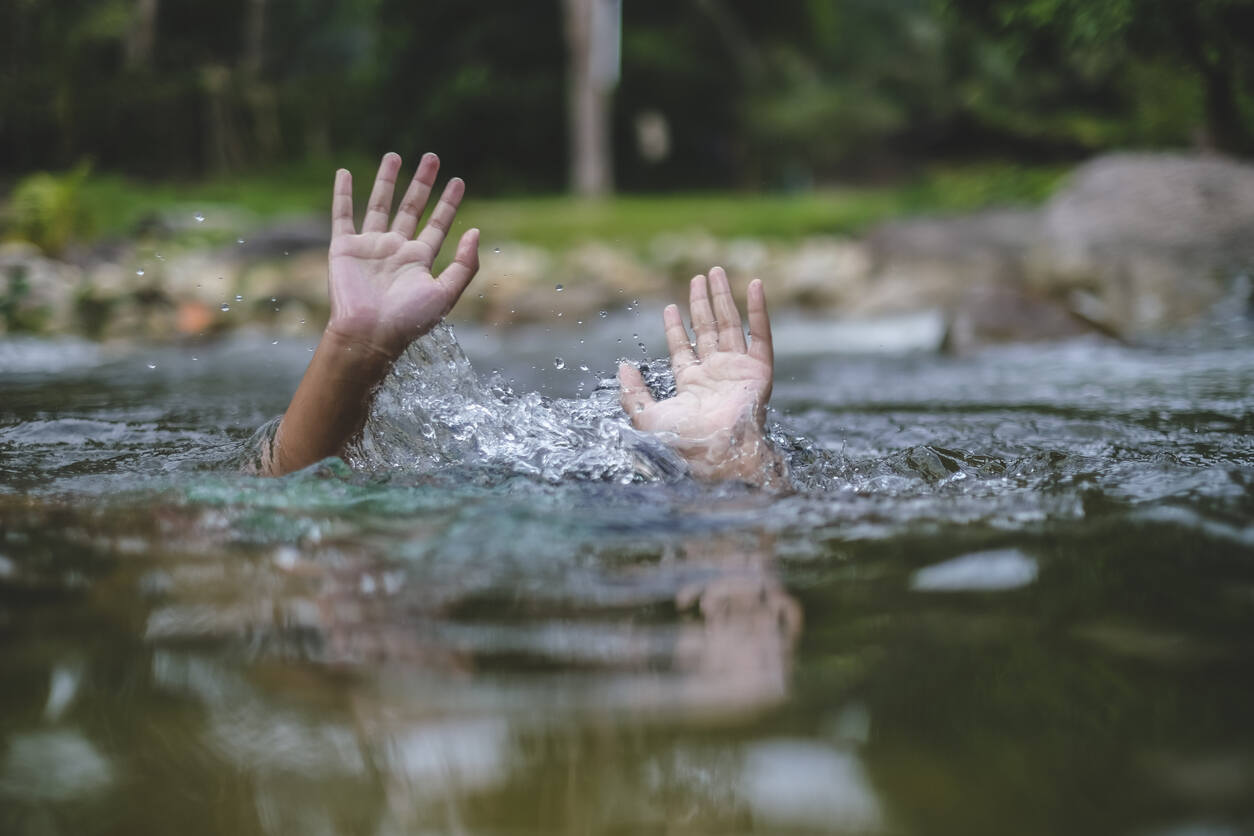
A drowning death is one of the most devastating and unexpected tragedies a Georgia family can face. Whether it happens in a private swimming pool, a lake, a river, at an apartment complex, a hotel, or during a recreational outing, the loss is sudden, overwhelming, and permanently life-altering. Families often leave the scene with no answers, no explanation, and no understanding of how such a preventable tragedy occurred.
Wrongful Death Krause Law Firm represents families across Georgia who have lost loved ones in fatal drowning accidents. Our attorney understands that these cases require meticulous investigation, a deep understanding of Georgia premises liability laws, and a compassionate approach to families navigating unbearable grief. When a drowning occurs because someone failed to act safely, Georgia law gives families the right to pursue justice and accountability.
Drowning deaths happen far more often than people realize. The Centers for Disease Control and Prevention (CDC) identifies drowning as a leading cause of unintentional injury death in the United States, particularly among children.
Georgia communities, from Atlanta, Savannah, Macon, Augusta, to smaller rural counties, see dozens of drowning deaths every year. Many of these deaths are preventable when proper supervision, safety equipment, and maintenance are in place.
Some of the most common locations for drowning deaths in Georgia include:
In many cases, drowning accidents occur because someone responsible for safety made a preventable mistake.
Drowning deaths rarely happen in silence or without warning. They are usually caused by a chain of failures that allows danger to go unnoticed or ignored.
Common causes of drowning accident deaths in Georgia include:
One of the most common causes is failure to monitor swimmers, especially children. Apartment complexes, hotels, campgrounds, and childcare facilities may be liable when lifeguards or supervisors are absent, distracted, or inadequately trained.
Georgia property owners are required to maintain reasonable pool safety barriers. Missing gates, broken locks, inadequate fencing, or propped-open access points create dangerous conditions that allow children or guests to access a pool unsupervised.
Many drowning deaths occur in pools with cloudy water, defective drains, missing depth markers, slippery surfaces, or malfunctioning pumps.
Lifeguards who are poorly trained, inattentive, or absent when required can create liability for the facility.
Boat operators, pool patrons, and resort activities can become deadly when supervision breaks down or operators disregard safety.
Georgia lakes and rivers can have hidden drop-offs, sudden currents, debris, and other underwater hazards that should be flagged or managed by the responsible entity.
Drowning may occur after boating accidents, jet-ski crashes, or capsizing incidents caused by negligent operation.
When negligence leads to a drowning death, Georgia law allows the family to pursue a wrongful death claim.
Drowning cases fall under Georgia’s wrongful death statute, O.C.G.A. § 51-4-1 through 51-4-5. These laws allow surviving family members to hold negligent parties accountable for the “full value of the life” of the person who died.
Families may pursue two separate legal actions:
This claim seeks compensation for:
Georgia employs a unique “full value of life” standard that assesses value from the deceased’s perspective.
Handled by the victim’s estate, this claim seeks damages for:
The order is strictly dictated by law:
Families often inadvertently file claims incorrectly because they are unsure of their rights or the law; our attorneys ensure the proper claimant is identified and that all applicable statutes are complied with.
Many drowning cases involve more than one responsible party. Georgia law allows claims against individuals, businesses, property owners, or government entities whose negligence contributed to the tragedy.
Potentially liable parties include:
Identifying responsibility requires a detailed investigation, which is something Wrongful Death Krause Law Firm conducts immediately to prevent evidence from disappearing.
Drowning investigations require technical experience because evidence can deteriorate quickly. Water conditions change by the hour, witness accounts fade, and defective equipment can be repaired or replaced before the family even knows what happened.
These cases often require:
Our attorneys understand the applicable standards of care across various facilities, from public pools to private residences, and we can identify violations that can lead to fatal injuries.
Insurance carriers often fight drowning death claims aggressively, and grieving families rarely expect the pushback they receive until they feel they have nowhere else to turn.
Common insurer tactics include:
Our attorneys know these strategies well. We confront insurers directly, relying on evidence, expert testimony, and Georgia law.
Our team conducts a thorough, independent investigation to uncover the actual cause of the drowning and identify every responsible party.
We gather:
We often work with:
Our goal is to ensure no one can hide behind inadequate reports or self-serving investigations.
Most wrongful death claims must be filed within two years of the date of death. Certain circumstances, such as criminal investigations, can pause (“toll”) this deadline, but families should not rely on exceptions.
Time matters because:
Our attorneys take immediate steps to secure and preserve evidence before it vanishes.
Families choose our firm because:
No family should face this tragedy alone, and no grieving parent or spouse should have to fight a property owner or insurer without an advocate.
If your family lost a loved one in a drowning accident in Georgia, you deserve answers and justice. Wrongful Death Krause Law Firm is here to protect your family’s rights, uncover the truth, and pursue full compensation under Georgia law. You pay nothing unless we recover for your family.
Call 404-835-8080 or contact us online for a free consultation. Your loved one mattered. Your family’s future matters. And we are here to help.

"I was in an accident involving an 18 wheeler. Roger and his staff was able to handle the case effectively. Although the trucking firm tried their best to low ball us, based discovery of the facts Roger was able to get an amount we deserved. I highly recommend the Wrongful Death Krause Law Firm to anyone seeking competent legal representation."
Lesol Soleil"Wrongful Death Krause Law Firm handled our accident case beyond our expectations. I highly recommend them to anyone who needs competent legal representation."
Jeewanthi Clemons"I would strongly recommend Roger Krause in a wrongful death case. He is very passionate about the cases and puts his clients first. He obtained justice for our family and because of this a policy for the hospital was changed to hopfully keep other family members from going thru what we have had to endure."
Angela Wise"Attorney Krause has been a blessing to me and my family in handling the wrongful death lawsuit of my husband. I went through two other attorneys in which they turned me down and wouldn’t take my case. Mr Krause has been nothing but kind and professional to me and my family and I would recommend him to anyone who needs a great attorney. Thank you for your support Mr Krause."
Lisa Satterfield"Roger Krause is a true warrior willing to take on the hard and important cases. He has never given up on my case and their results are incredible. I was one of Atlanta’s Bravest for many years – I know true warriors. I have referred Roger Krause to my friends and family, and I would refer them to you."
Joseph Amos"After talking with other attorneys, I truly found a wonderful, caring and compassionate man. Roger has truly been a blessing. I would recommend him to anyone that will listen. And OMG the office staff is extremely helpful if he isn’t around. GREAT SERVICE & A WONDERFUL ATTORNEY!"
Daphyne M."I very highly recommend Attorney Roger Krause for any legal matters. He handled a situation for me with such expertise, that, when I recently moved to the state of California, a state that has thousands of attorneys, I called attorney Krause in Georgia, to get him involved due to his extremely high ethical conduct, honesty and his tenacity and professionalism and I knew, from previous experience, that he would keep me well informed in moving ahead with my legal matters. Attorney Krause was highly recommended to me and I likewise do the same to anyone needing legal advice."
Raymond M."Roger Krause is one of the most caring attorneys I know and I would strongly recommend him. He worked on a personal injury case for me and the outcome was victorious if I ever need another attorney he would definitely be the one for me."
Anita Johnson"I can’t express into so much of words how I was and will always be satisfied with the care, support, and effort Mr. Roger and Firm put into seeing my case through for me and my family. It was truly a reassurance that he made time just for me to see my case through. I’d highly recommend this firm from any other in the State of Georgia. Thanks so much for everything Mr. Roger and Ariana!"
Shakendra Benton"I really appreciate the hard work. My family is finally at some peace thank you, Mr. Krause. He’s the best recommend anyone with wrongful death to go with them! They are the best!"
Mercedes Espinosa"Roger helped bring us justice and a peace of mind for our Dad who had passed due to the doctor and staff who neglected while doing a procedure that he wasnt fit for. Roger has shown me and my family that he was the man for the job hands down"
Johna"Roger has done an amazing job with my case. He is very knowledgeable and patient and has done an outstanding job with keeping me informed on everything that goes on throughout the process. I would definitely hire him again!"
ShaniceCopyright © 2026 Wrongful Death Krause Law Firm